

- Home
- Our services
- Ants
- Carpenter ants
Carpenter ant extermination
Montreal, Laval and the South Shore
Carpenter ants don't eat wood: they dig into it to make room for the colony, and they start with wood that's damp or damaged. A window frame that lets water in, a porch touching the ground, a section of roof that leaks. We find and treat the nests, then show you which moisture problems to fix.
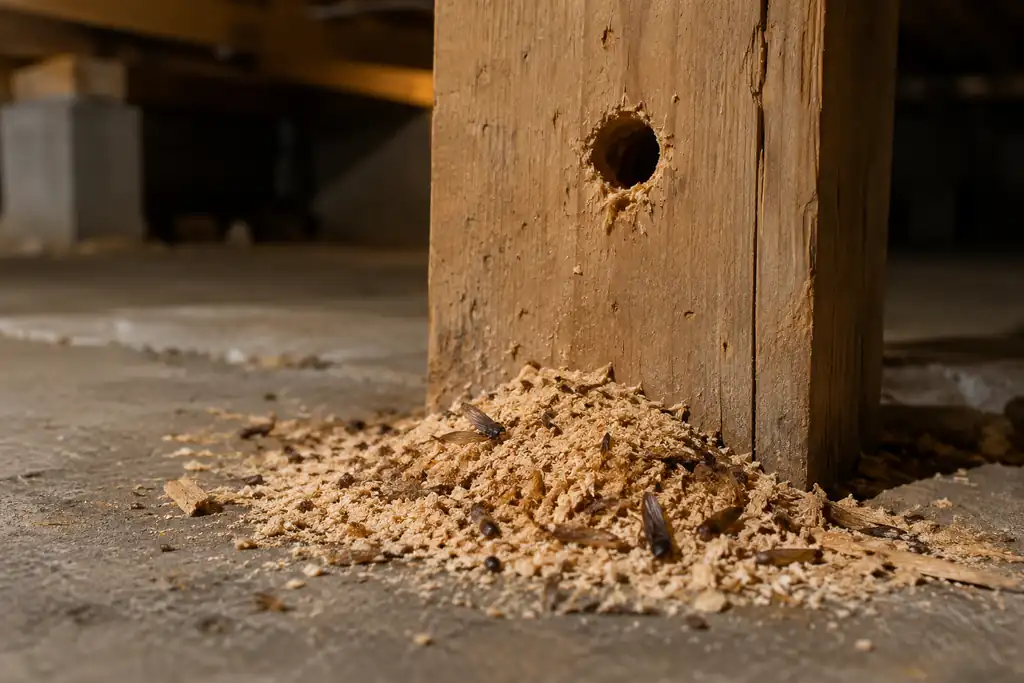
Unlike termites, these ants can't digest wood. They carve out galleries to house the colony and push out fine shavings that look like sawdust. Their natural habitat is the forest: stumps, dead trunks, rotting logs. In a house they look for the same thing, wet or rotting wood, and as the nest expands they can carry their galleries into sound wood.
As Montreal's Insectarium puts it, these ants are often a symptom of a moisture problem rather than the problem itself. The colony found in the house may also be just a satellite nest, linked to a parent colony living outdoors in a tree or a stump. Our ant extermination page covers the other species; this one is about the ant that goes after wood. To understand the queen's role, also read why ants keep coming back.
Where damp wood draws them in
Window and door frames
Cracked caulking lets water seep into the wooden frame. A little sawdust on the windowsill may be the only visible clue.
Porches, balconies and stairs
The wooden steps, posts and joists of porches and outdoor staircases, so common on Montreal plexes, hold moisture where they meet the ground or the concrete.
Leaky roofs and gutters
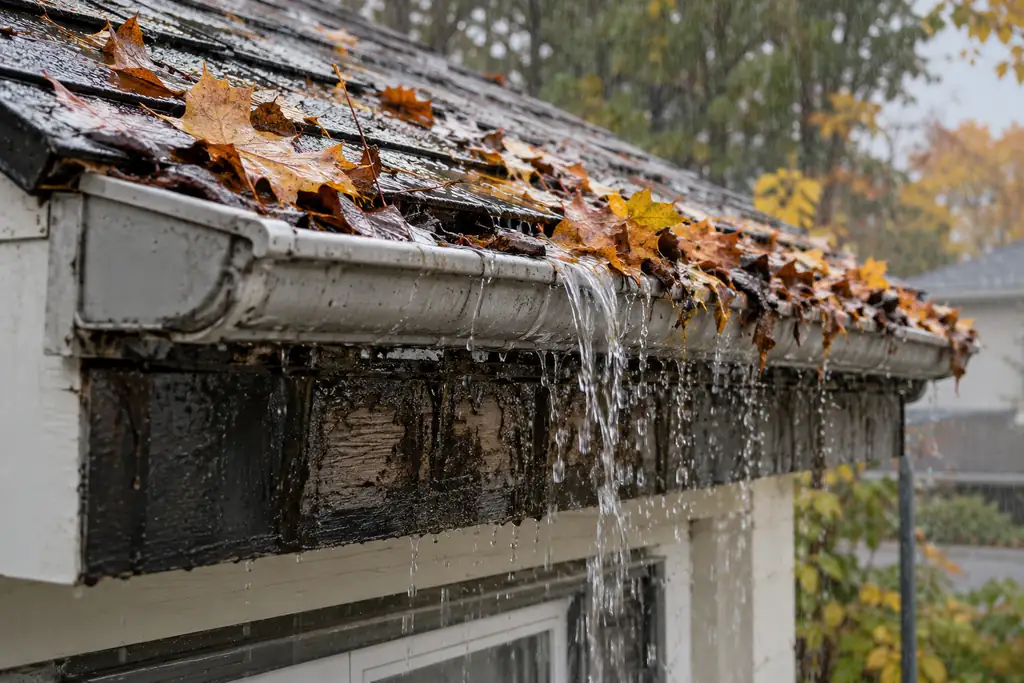
A leak near a chimney, a skylight or a clogged gutter soaks the roof deck and the rafters in the attic. A colony can settle in well before anyone notices.
Wood touching the soil
The bottom of a shed, a fence rail, wooden garden edging, firewood stacked against the house: anything that stays wet near the foundation can give a colony its start.
The buildings where they settle

Residential
- Wooden window frames and patio doors
- Plex porches, balconies and outdoor staircases
- Attics under a roof that has leaked
- Damp basements and under-sink cabinets
- Sheds and firewood piles
- Homes near a wooded area or park
Commercial and industrial
- Apartment buildings with wooden balconies
- Restaurants with wooden patios
- Warehouses with pallets stored outside
- Daycares and schools with wooden structures
- Businesses in older buildings
Signs of a colony in your home's wood
A big black ant in the kitchen in spring doesn't prove a colony lives in your walls; these are the signs that count.
- Ants active indoors in the middle of winter: the nest and queen are inside or right by the foundation
- Winged ants coming out of a crack in a wall or ceiling and heading for the windows; in winter in Quebec, only carpenter ants have winged adults
- Small piles of fine sawdust that keep reappearing in the same spot, under a crack, a hole or a baseboard
- A faint clicking or dry rustling inside a wall or woodwork, mostly at night, louder when you tap the surface
- Trails of large ants at night between a window, a baseboard and the outdoors
- Wood near a leak that sounds hollow or gives under the tip of a screwdriver
How we get rid of carpenter ants
We don't just treat the ants you can see; we track down where they're coming from.
Moisture inspection
We follow the trails, check the risk areas from basement to attic, and look for sawdust, soft wood and signs of leaks.
Locating the nests
The main nest may be outdoors, in a tree, a stump or old lumber, with one or more satellite nests in the building. As Health Canada points out, with a satellite colony the most effective approach is to find and destroy the parent colony.
Targeted treatment
Nests and galleries are treated with registered products, applied according to the rules, indoors and outdoors depending on what we find.
Repairs and prevention
We tell you which wood to replace, which leaks to fix, which branches to trim and which entry points to seal, such as cracks or gaps around wires coming into the house. Without those fixes, damp wood stays an open invitation to the next queen. Our sealing entry points service takes care of the openings; rotten wood and leaks are a job for a contractor.
Fix the moisture so they don't come back
- Repair roof, plumbing and gutter leaks, and replace rotted wood: treating without repairing leaves room for a new colony.
- Redo the caulking around windows and doors, and ventilate the bathroom, the laundry room and the basement.
- Stack firewood away from the house on supports that keep it off the ground, and knock the logs together before bringing them in.
- Trim branches that touch the roof or siding: ants use them as bridges, just like electrical or phone wires.
- Don't bury stumps or wood scraps near the foundation, and keep an eye on wooden edging, low walls and thick mulch against the house.
- A preventive exterior treatment helps limit ants travelling along the foundation, alongside the repairs.
Frequently asked questions
Can't find what you're looking for? A technician answers 24/7.
Call 514-231-1615I saw a few big black ants in spring. Do I have a colony in the house?
Not necessarily. In spring and summer, scouts from outside come in looking for food without living in your home. Signs of an indoor nest are ants active in winter, winged ants coming out of the walls and sawdust that keeps showing up in the same spot.
Can carpenter ants damage the structure of my house?
They don't eat wood, but they hollow it out, and a well-established colony can extend its galleries into sound wood. How much damage there is depends on the age of the colony and how wet the wood is. If a piece of wood feels soft or sounds hollow, have a contractor check it in addition to the treatment.
I'm a tenant and I have carpenter ants. Who should call the exterminator?
In Montreal, the City asks tenants to notify their landlord promptly, in writing; it's the landlord's job to bring in a pest control company. If the landlord is slow to act, you can let the City know through 311. The City also advises tenants not to try to deal with the problem themselves.
How much does carpenter ant treatment cost?
Three things matter: the number of nests to treat, main and satellite, how hard they are to reach in the walls or attic, and the size of the building. After an on-site assessment, you get a free quote.
