

- Home
- Our services
- Mice
- Sealing entry points
Sealing rodent and wildlife entry points
Montreal, Laval and the South Shore
A mouse slips through a crack, a rat through a hole the size of a quarter, a raccoon through a torn roof vent. We go around the whole building, find every opening and seal it at the right time, never with an animal still inside.
Treatment or capture solves today's problem; sealing the entry points solves next fall's. Every building has weak spots: the top of the foundation, the holes cut for water, gas, electrical and heat pump lines, dryer and exhaust vents, soffits, roof corners and the chimney. Mice and rats mostly come in low, squirrels and raccoons come in high, and an opening left as it is will sooner or later be used again.
Order matters. We seal after the capture or treatment, never before. The Quebec government is clear: before closing an opening, make sure no animal is inside, or its attempts to get out can cause serious damage. As for young left alone behind a sealed opening, they will not survive. From April to August, when raccoons, squirrels and skunks have their young, we check that nobody is left inside before closing anything. For an animal that has already moved in, see our wildlife removal service.
The weak spots we check
Foundation and utility entries
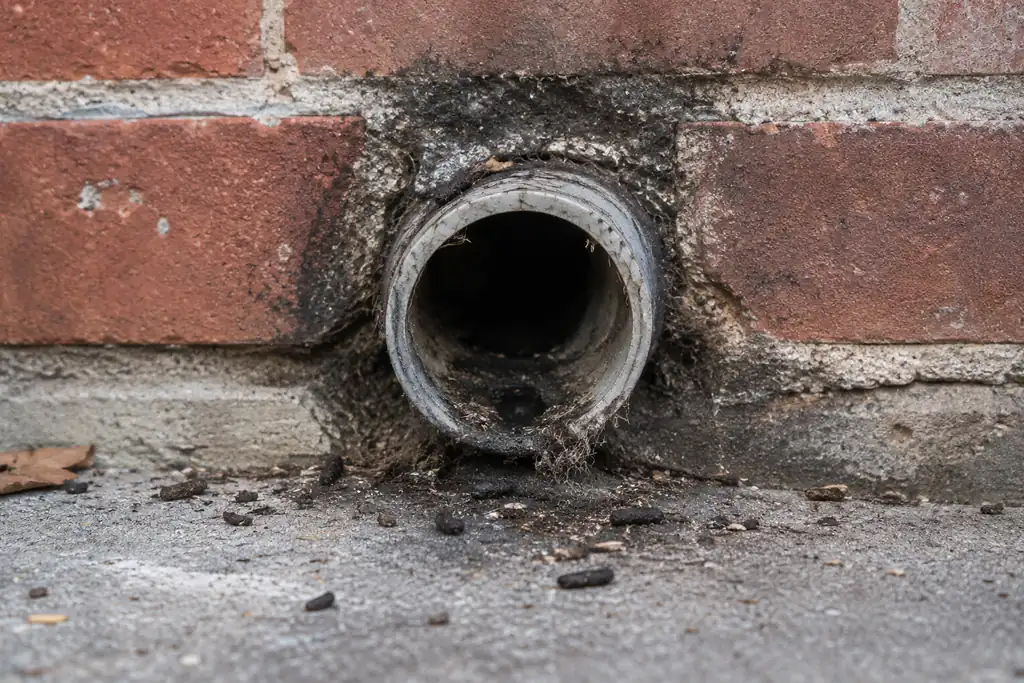
Cracks, worn mortar joints, the joint between the siding and the foundation, and above all the gaps around pipes, wires and heat pump lines that go through the wall, often left open or filled with spray foam that rodents chew through.
Dryer and exhaust vents
A broken flap, one stuck open or one with no grille lets in mice and birds, sometimes even a squirrel. The fix has to keep animals out without restricting the airflow or trapping lint.
Soffits, fascia and roof
A loose soffit, a rotten fascia board, a lifted roof vent or a chewed roof corner: that is the classic route squirrels and raccoons take to the attic.
Chimney and under the porch
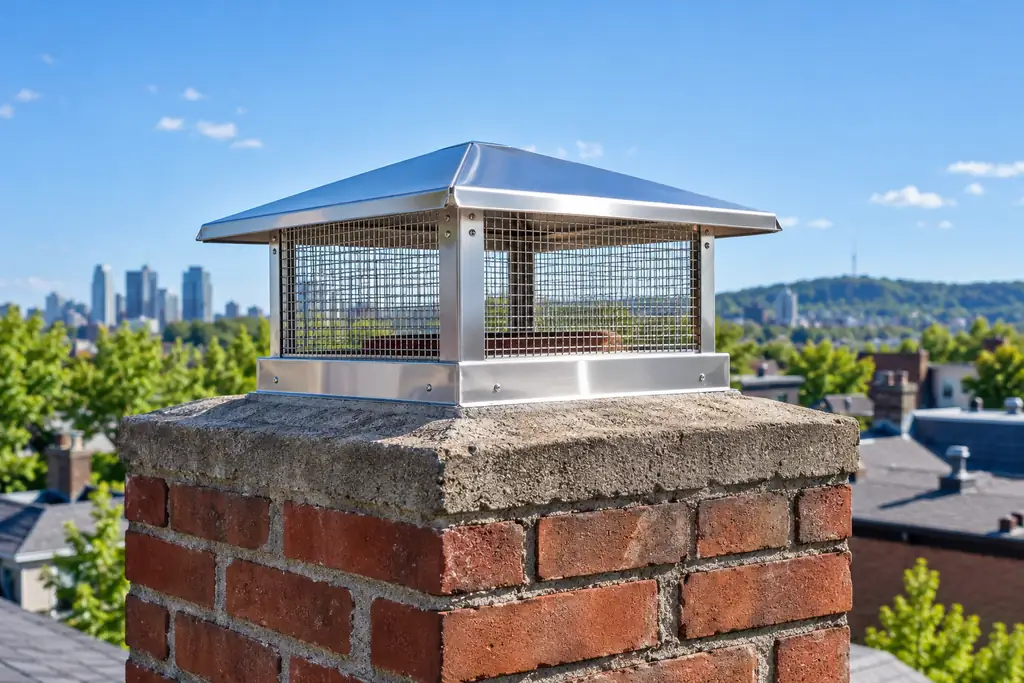
A chimney with no cap can become a raccoon den. At ground level, the space under a porch, shed or deck draws skunks and groundhogs; metal mesh buried in the ground and bent outward in an L shape keeps them from digging underneath.
Signs an opening is being used
Not every opening is in use; these clues tell you which ones are.
- A dark, shiny mark around a hole in the foundation or a pipe, left by fur rubbing against it
- Daylight or a cold draft around a utility entry, on the basement side
- A vent grille pushed in, torn or bent inward
- A bulging or loose soffit, tooth marks on the corner of a fascia board
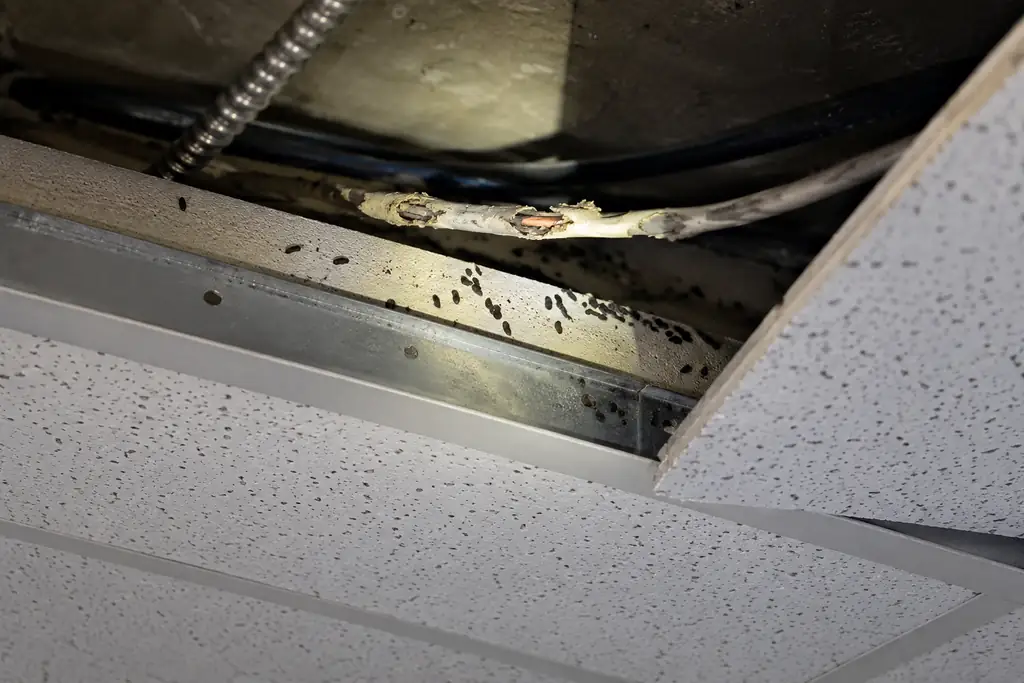
- Chewed spray foam or bits of insulation at the foot of an exterior wall
- A pile of fresh soil at the foot of a step, a porch or a shed
How we proceed
A seal only holds if the animal is out and the material can take it.
Building envelope inspection
We go all the way around the building, from the foundation up to the roof where it can be reached, and sort every opening: active, old or at risk.
Capture or treatment first
If an animal or rodents are still inside, that comes first. In spring and summer, we check for young before sealing anything.
Sealing with the right material
Sturdy metal mesh wherever an animal could bite or claw through, steel wool covered with sealant around pipes, metal flashing along the bottom of the siding, metal door sweeps under doors. If the roof, masonry or siding needs real repairs, we show you what to have fixed and where.
Checks and follow-up
We make sure nothing is getting through and that no animal has opened a new way in somewhere else. You also know what to watch for from one season to the next.

What you can keep an eye on yourself
- Once a season, walk along the foundation with a flashlight and look at every pipe, wire and line that enters the house.
- Make sure the dryer vent flap closes properly after each load; a flap that stays open is a doorway.
- Never leave a temporary patch of cardboard, soft wood or foam: rodents get through it quickly.
- Replace a garage door seal that is worn at the corners, where it no longer touches the ground.
- If your chimney has no cap, have one installed that is designed for it.
- In spring and summer, if you hear young in the attic, do not seal anything and call us.
Where sealing makes a difference

Residential
- Homes with a crawl space or unfinished basement
- Plexes with balconies and outdoor staircases
- Cornices and flat roofs on plexes
- Sheds and detached garages
- Homes next to a park or wooded area
- Semi-detached and row houses
Commercial and industrial
- Garage doors and warehouse loading docks
- Flat roofs and parapets on commercial buildings
- Restaurant kitchens and hood exhausts
- Food storage rooms
- Crawl spaces in apartment buildings
- Utility entries in industrial buildings
Frequently asked questions
Can't find what you're looking for? A technician answers 24/7.
Call 514-231-1615Why not seal the hole before getting the animal out?
Because a trapped animal looks for another way out. The Quebec government warns that a squirrel shut inside causes serious damage trying to escape. A raccoon shut in can tear off a soffit or part of the roof, and young left behind will not survive. Capture first, seal second.
How do I know the animal is gone before sealing the opening?
For a den under a porch or shed, the Quebec government suggests, in the case of skunks, blocking every opening but one and covering the ground at that exit with flour to make sure the skunk has left its den. The last opening is closed once the animal is out, and only after the young have left. In the attic, noises that keep going, especially small cries, mean someone is still there; when in doubt, we check before closing anything.
What material keeps mice out?
Health Canada recommends packing steel wool into holes around pipes before covering them with caulking, patching foundation cracks, putting metal weather stripping under doors and covering attic vents with fine metal mesh. Foam on its own will not stop them; see also our page on mice in the walls.
How do I block off the space under a porch or shed?
The Quebec government recommends metal mesh buried about fifteen centimetres deep and bent outward in an L shape for forty to fifty centimetres, so an animal digging down runs into the mesh instead of getting under it. Before closing it off, make sure the animal is out, and wait for the young to leave if there are any. For a skunk that has already moved in, see our skunk removal page.
How much does sealing entry points cost?
It comes down to the number of openings, how high and how easy to reach they are, the materials needed and whether an animal has to be captured first. A house with a few utility entries does not need the same work as a plex with soffits and a flat roof. The quote is free and comes after we inspect the building.
Related services

Also read: How to tell if you have mice in your house
