
- Home
- Our services
- Rats
- Rats in the yard
Rats in the yard and around the house
Montreal, Laval and the South Shore
A fresh hole along the foundation, birdseed vanishing overnight under the feeder, a chewed garbage bin: rats have found food and cover in your yard. The time to act is before they also find their way into the basement.
The rats we see in local backyards are diggers. They pick a spot that keeps them hidden and where the soil holds: along the foundation, under the floor of a shed, beneath a wooden deck, a patio slab or the porch steps. A burrow often has more than one exit, and every night the rats take the same route to their food. In neighbourhoods with back alleys, they move from yard to yard along fences, sheds and garages, which is why the problem is rarely solved at just one address.
As long as the yard feeds them, they stay. They end up inside when a burrow dug against the foundation runs into a weak spot, especially once the cold sets in. The City of Montreal lists, among other ways in, an unused plumbing opening, a broken pipe and a crack wider than fifteen millimetres in a wall. If they are already in, our rat extermination page explains how we treat the building.
What feeds rats in a backyard
The composter
A composter sitting right on the soil becomes a pantry with a roof. Health Canada advises putting a layer of heavy metal mesh between the soil and the bottom of the composter and keeping fatty or oily food waste, eggs and milk products out of it.
The bird feeder
Birds eat during the day; at night, rats clean up whatever fell. A feeder hanging over a flower bed or a deck can keep them fed all season.
Pet food
The cat's bowl on the balcony, the dog's kibble in the shed: anything left out overnight draws rats, and so do bags of pet food stored in the garage.
Garbage and bins
A bag left on the ground in the alley the night before pickup, a bin with a cracked lid, a brown food waste bin that does not close properly: rats chew through plastic to help themselves. A sturdy bin with a tight lid, put out as close to pickup time as you can, takes away an easy meal.
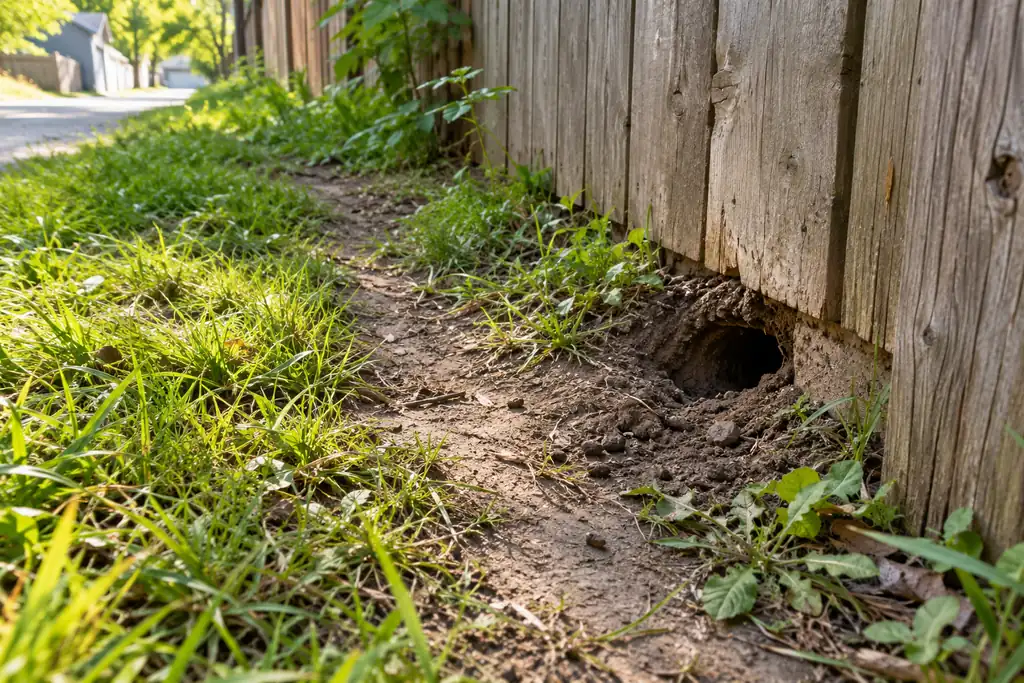
Signs of rats in your yard
Rats rarely show themselves in daylight, but their traces stay behind.
- A round hole along the foundation, a fence or under a slab, with fresh soil pushed out in front
- A beaten path in the grass or mulch, always the same one, between a hiding spot and food
- Long droppings near the composter, under the bird feeder or behind the shed
- A wheeled bin or composter chewed along the rim or near the bottom
- Tomatoes, squash or fallen fruit bitten into overnight
- A rat seen in broad daylight, often a sign the colony has grown
How we clear a yard of rats
We treat the yard and the building as a single problem.
Yard inspection
We locate burrows, runways and sources of food and water, then walk the foundation, drains and utility entries to see whether the rats already have a way inside.
Treatment near the burrows
Treatment goes near the burrows and along their routes, following municipal rules, using registered products set up so children, pets and wildlife cannot get to them.
Closing the route to the house
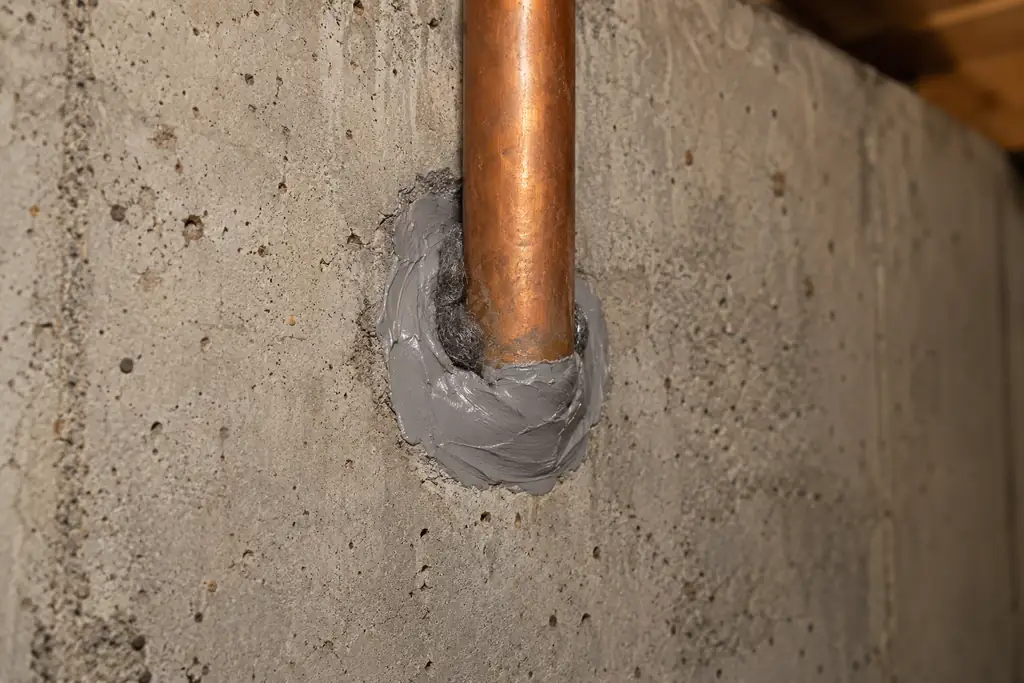
We seal the passages between the yard and the building: cracks, gaps around pipes, the space under the porch, unused drains. For the City of Montreal, rats on a property point to a problem in the sewer pipes connecting it to the main collector; if the clues lead there, we tell you so you can have a plumber check the connection.
Follow-up and prevention
We go over the composter, the feeder, the bins and the hiding spots with you, then follow up to make sure the activity has stopped.
Stop your yard from feeding them
- Take the bird feeder down during treatment; afterwards, pick up fallen seed every evening.
- Set your composter on sturdy metal mesh, away from the walls of the house, and keep the lid closed.
- Bring the cat or dog bowl in before dark and never leave an open bag of pet food in the shed.
- Use sturdy bins with tight lids and never leave a garbage bag directly on the ground in the alley.
- Raise the woodpile off the ground and move it away from the walls; pick up fallen fruit in the garden and under the trees as well.
- Once treatment is done, fill old burrows with packed soil: a hole that reopens the next day means activity is continuing, so give us a call.
 Service 24/7, free quote
The parts of a yard rats like most

Residential
- Along the foundation and under the porch steps
- Under the shed or detached garage
- Under a wooden deck or patio slab
- Around the composter and vegetable garden
- Behind hedges, woodpiles and debris
- Along fences that back onto the alley
Commercial and industrial
- Restaurant dumpster areas
- Loading docks and warehouse yards
- Planted strips and slopes around parking lots
- Restaurant terraces
- Apartment building yards and bin shelters
- Around construction sites and sewer work
Frequently asked questions
Can't find what you're looking for? A technician answers 24/7.
Call 514-231-1615Does the City of Montreal deal with rats in my yard?
Not on private property: the City says the owner must call a qualified exterminator and take the required corrective action. For rats seen in a park, an alley or another public place, it asks you to contact 311. If you rent, tell your landlord right away; in Laval or on the South Shore, check with your own municipality.
Is this hole in my yard a rat burrow?
A rat burrow is usually tight against a structure (foundation, slab, shed, fence), with a smooth entrance and fresh soil pushed out in front. A path often leads to it, and you will find long droppings close by. A very large hole with a mound of dirt under a shed points more to a groundhog; a strong smell under the porch, to a skunk.
Will the rats in my yard end up getting into the house?
It is a real risk if nothing stops them, especially as winter approaches. If you hear thumping in the basement ceiling or find droppings near the floor drain or in the cold room, they have already made it in. That is why we treat the yard and handle sealing the entry points as part of the same job.
Are rats in the yard a health risk?
The Public Health Agency of Canada says rodents, especially rats, are the main carriers of leptospirosis, a disease caused by bacteria that an infected animal's urine leaves in soil or water. No need to panic: wear gloves to handle a soiled bin, object or soil, then wash up with soap and water.
How much does rat control in a yard cost?
The price varies with the number of burrows, the size of the yard, what we find around the foundation and how much sealing is needed. A plex backyard on an alley is not handled like the grounds of a business or restaurant. We look at the yard first, then give you a free quote.
Related services


Also read: A rat in your house or yard: what to do