
- Home
- Our services
- Mice
- Mice in the walls
Mice in the walls and ceilings
Montreal, Laval and the South Shore
Scratching in the wall once the house goes quiet, droppings under the sink, a smell that settles into a cupboard: mice have found a route through the structure. We follow it back to where they get in, get rid of the mice already inside, then close the gap.
In a house, a plex or an apartment building, the hollow space inside the walls works like a network of warm, quiet hallways. Mice usually get in low, at the foundation or through the crawl space, then climb between the studs, follow pipes and wiring from floor to floor and sometimes end up nesting in the attic insulation. The holes drilled for plumbing are almost always wider than the pipes, and that gap is how they get from the wall into a kitchen cabinet, the bathtub enclosure or the basement ceiling.
That is why one mouse caught in a trap in the middle of the kitchen does not change much. The ones nesting in the wall keep coming out at night through the same gaps, along the baseboards, and the outside entry stays open for the next ones. Health Canada makes the same point: baits and poisons should not be your only method. To stop the noise, treatment has to go where they travel, followed by sealing the entry points from the outside. If mice are turning up all over the house, see our mouse extermination page as well.
The routes mice take through a house
Crawl space and top of the foundation
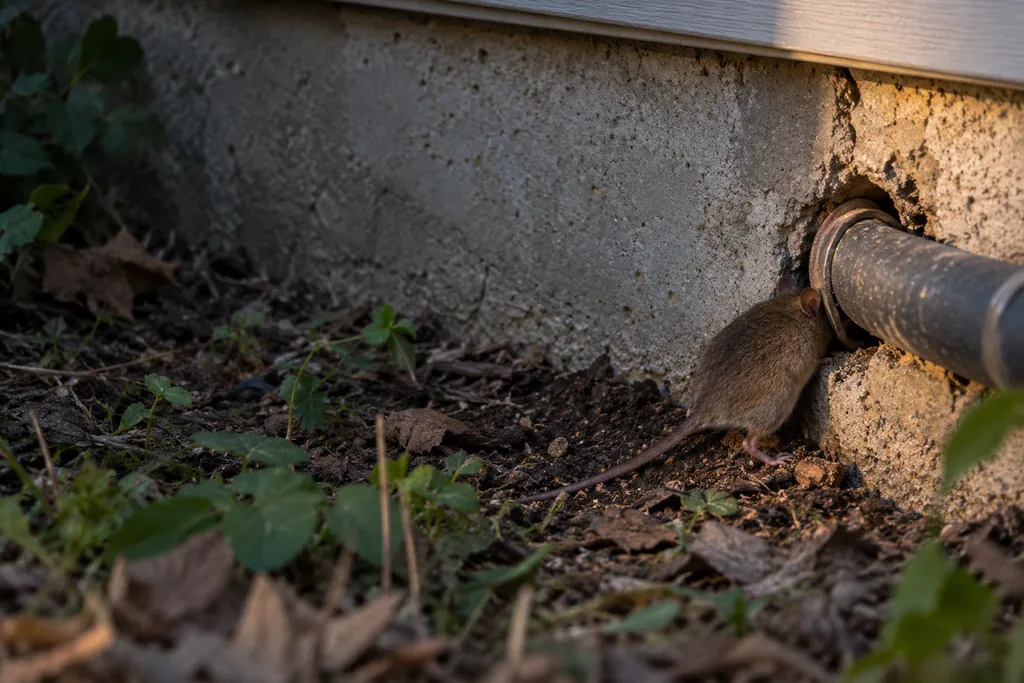
This is often where it starts. A crack, a worn mortar joint or the gap where the foundation meets the bottom of the wall leads straight into the cavities. In a crawl space, insulation and bare ground give them a first sheltered spot.
Plumbing runs
Under the sink, behind the dishwasher, around the tub drain: mice follow the pipes to change floors and, in a plex, to move from one unit to the next. The plumbing stack is their staircase.
Under cabinets and appliances
The hidden space behind the cabinet toe kicks, the area under the fridge where the motor keeps things warm and the back of the stove are favourite stops: heat, crumbs and nobody to bother them.
Attic and ceilings
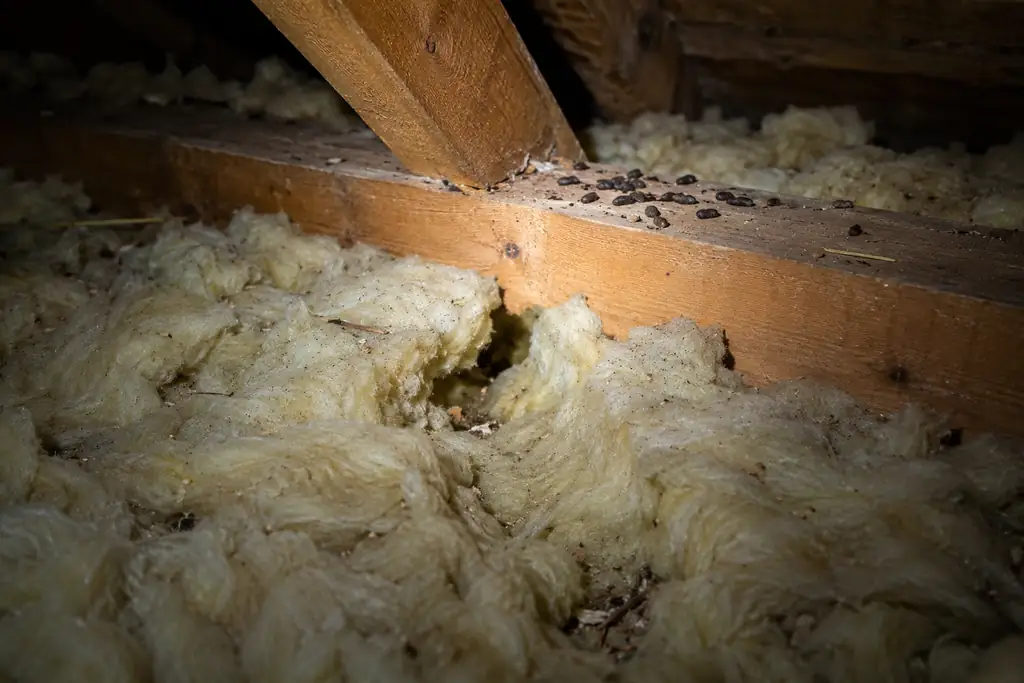
Through the exterior walls they climb up to the attic, where the insulation turns into a nest. Scratching in the top-floor ceiling late in the evening often comes from there. A heavier noise in broad daylight sounds more like a squirrel.
Signs of mice inside your walls
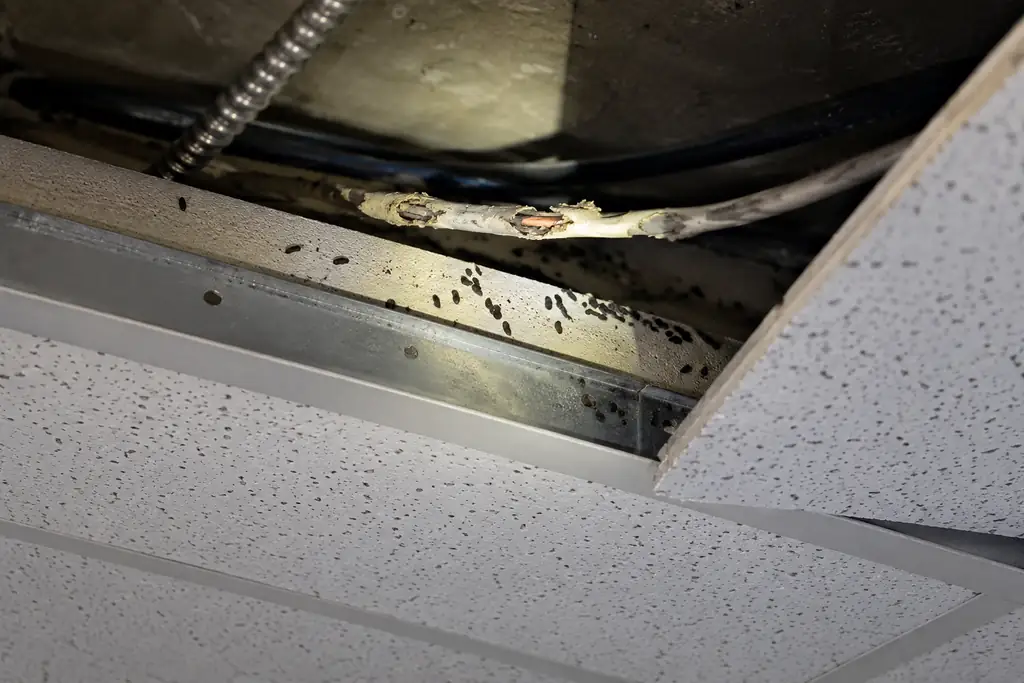
These clues tell you where they travel, not just that they are around.
- Light scurrying that always starts from the same spot in a partition or the ceiling, once the lights are out
- Droppings under the sink or in the drawer below the oven: dark and shiny means recent, grey and crumbly means old
- Stashes of pet kibble or birdseed turning up in a drawer, a boot or behind furniture
- A sharp urine smell that keeps coming back in a cupboard, even after cleaning
- A sudden smell of rot near a wall or baseboard, often a dead mouse inside a cavity
- Dark smudges or rub marks around a pipe hole, an electrical outlet or a loose baseboard
Where we find them most often
Residential
- Shared walls in duplexes, triplexes and semi-detached homes
- Drop ceilings in finished basements
- Bathtub enclosures and plumbing stacks
- Under kitchen and bathroom cabinets
- Attic and exterior wall insulation
- Crawl spaces and cold rooms
Commercial and industrial
- Drop ceilings in offices and stores
- Restaurant kitchens, behind the equipment
- Drywall partitions in warehouses
- Shared walls between neighbouring businesses
- Mechanical and utility rooms
- Apartment buildings, from one unit to the next
Our approach, step by step
The order of the steps changes the result.
Tracing the route
We follow the clues from the inside out: droppings, rub marks, gaps around pipes, the basement ceiling, the crawl space, the attic. The goal is to map the whole route, from the entry point to the places where they feed.
Treatment along their routes
Treatment goes where they travel, along the walls and near the gaps we found, using registered products kept out of reach of children and pets. We explain what to do while it works.
Sealing at the right time
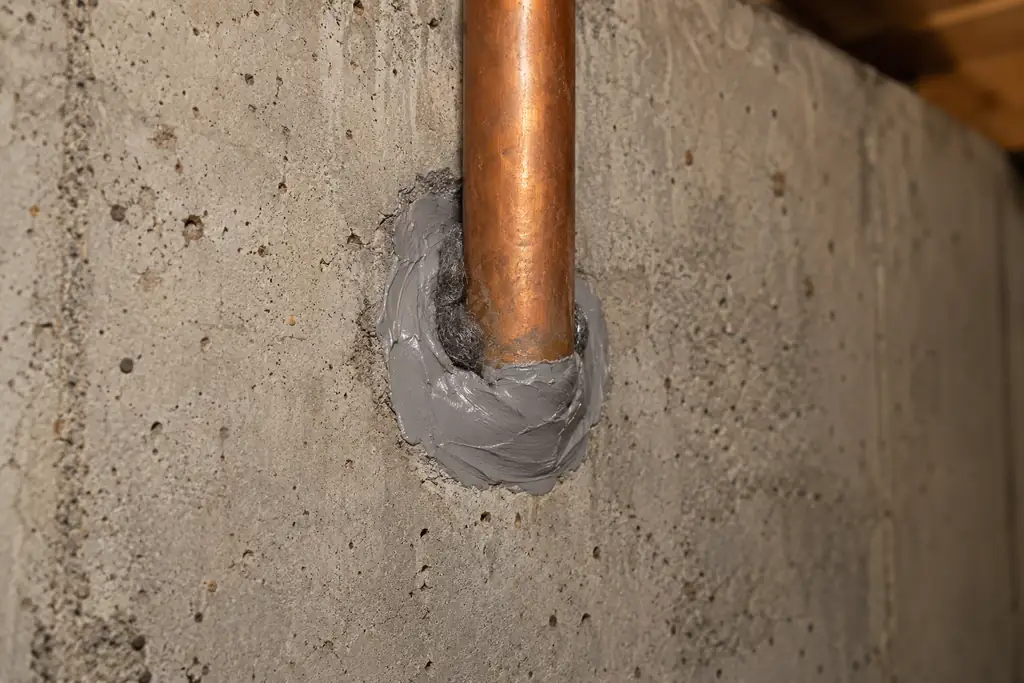
Once activity drops, we close the outside entries with materials mice cannot chew through, then the inside passages that matter, like the gap under the sink. Sealing too early keeps them in and pushes them to chew somewhere else.
Prevention and follow-up
We show you what draws them to your home, from the birdseed bag to the recycling bin, and the follow-up confirms the noise has stopped and nothing is getting through.
Keeping mice out of your walls
- Store birdseed and pet kibble in metal or glass containers with tight lids rather than the original bag, especially in the garage and basement.
- Once a season, pull out the fridge and stove and look behind them: droppings that come back after you clean mean mice are still getting through.
- Never plug an inside hole with foam alone, since mice chew right through it; steel wool covered with caulking holds up much better.
- Keep a clear strip along the basement and garage walls so droppings and new holes are easy to spot.
- If you are renovating, make the most of it: an open wall is the right time to seal plumbing and wiring holes between floors.
- Do not rely on ultrasonic devices: Health Canada notes that rodents can get used to them and come back.
 Service 24/7, free quote
Frequently asked questions
Can't find what you're looking for? A technician answers 24/7.
Call 514-231-1615How can I tell if it's a mouse, a rat or a squirrel in the wall?
Mice make a light, quick sound, mostly in the evening and at night, often low in the walls or in a ceiling. Rats are louder, with heavier sounds and much bigger droppings; our rat extermination page covers them. Squirrels are active during the day, especially in the morning, and you usually hear them in the attic or the soffits.
Should I plug the holes in the wall as soon as I hear mice?
Not the inside holes, and not right away. If mice are still in the cavity, they may chew another way out or die inside the wall, and you will smell it. Get rid of the mice inside first, then seal the outside entries and the inside passages.
How do I clean up mouse droppings in a cupboard?
Do not sweep or vacuum dry droppings. The Public Health Agency of Canada recommends wearing gloves, spraying the droppings with a disinfectant or a solution of one part bleach to nine parts water, letting it sit for ten minutes, then wiping them up with paper towels; in a confined space like a crawl space, wear an N95 mask. Seal everything in a double bag and wash your hands. Hantavirus infections are rare in Quebec, but these precautions apply to droppings from any rodent.
Why can I still hear mice after setting traps?
Traps catch the mice that come out, not the ones nesting in the cavity, and the outside entry is still open. Health Canada recommends setting them along the walls, most of them at a right angle to the wall, and checking them every day; even well placed, they do not seal anything. Our guide to the signs of mice helps you spot where they travel.
How much does it cost to get rid of mice in the walls?
The price depends on how many rooms and floors are affected, how easy it is to reach the cavities (crawl space, attic, finished ceiling) and how many entry points need sealing. In a plex or an apartment building, more than one unit sometimes needs an inspection. You get a free quote once we have looked at the situation.
Related services
Also read: How to tell if you have mice in your house