

- Home
- Our services
- Wildlife
- Squirrel
Squirrel removal
Attics, soffits and walls
Scratching in the ceiling right at daybreak, a chewed hole at the corner of a soffit, nut shells in the gutter: a squirrel has found its way into your attic. We trap it, make sure none are left inside and seal the opening with sturdy metal mesh.
The grey squirrel, the one you see all over Greater Montreal, is active by day, especially in the early hours, and doesn't hibernate. That's why you hear it mostly in the morning and on and off during the day, while a raccoon makes its noise at night.
A female grey squirrel can have one or two litters a year, with births anywhere from April to August; the smaller red squirrel usually has one litter in spring. From spring to late summer, there may be young in a nest built in the attic. Close the opening at that point and you shut in animals that will chew through the roof or wall to get out, making the damage worse.
What a squirrel does to a roof
Chewed soffits and fascia
It gnaws a poorly sealed joint wider at the corner of the roof, where the soffit meets the fascia, or chews through a plastic vent cover. The edges of the hole are gnawed, often rounded.
Electrical and phone wires
Like all rodents, its teeth never stop growing, and it goes after wires. A chewed wire jacket in the attic needs to be looked at by an electrician.
Insulation and woodwork
It packs down the insulation to build a nest, hides nuts in it and gnaws on wood near the entrance.
Walls and ceilings
It travels between the joists and sometimes drops down inside a wall. Then the scratching comes from lower down, in a bedroom or living room, and it's easy to mistake for mice in the walls.
Signs of a squirrel in the roof
Watch your roof early in the day: that's when it shows itself most.
- Scratching and quick running in the ceiling early in the morning, quieting down after dark
- A squirrel that disappears under the roof edge or behind a gutter, always in the same spot
- A hole with gnawed edges in a soffit corner, a fascia board or a vent cover
- Nut shells, cones or seeds in the gutter, on the deck or up in the attic
- A rolling sound in the ceiling, like a nut being pushed around
- Wires, trim or ducts chewed near the opening
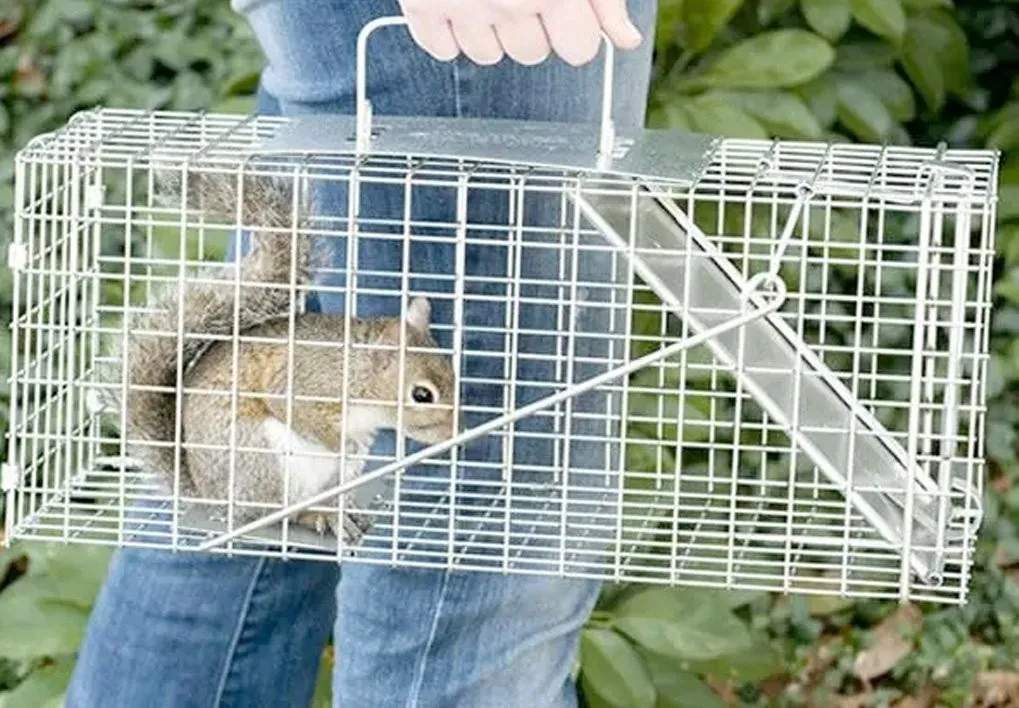
How we get squirrels out of the roof
The goal: none left inside when the opening is sealed.
Roofline inspection
We check the soffits, fascia, vents and roof joints to find the main entrance and any secondary openings. In the attic, we look at the nest, the insulation and the condition of the wiring.
Cages by the entrance
Cages made for squirrels go near the entrance it uses. From April to late summer, we account for possible young so none are left in the nest.
Removal by the rules
The trapped squirrel is removed according to Quebec rules. The government also strongly advises against taking a squirrel far from where it was caught, partly because another one soon moves into the empty spot if the opening stays unsealed.
Sealing with metal mesh
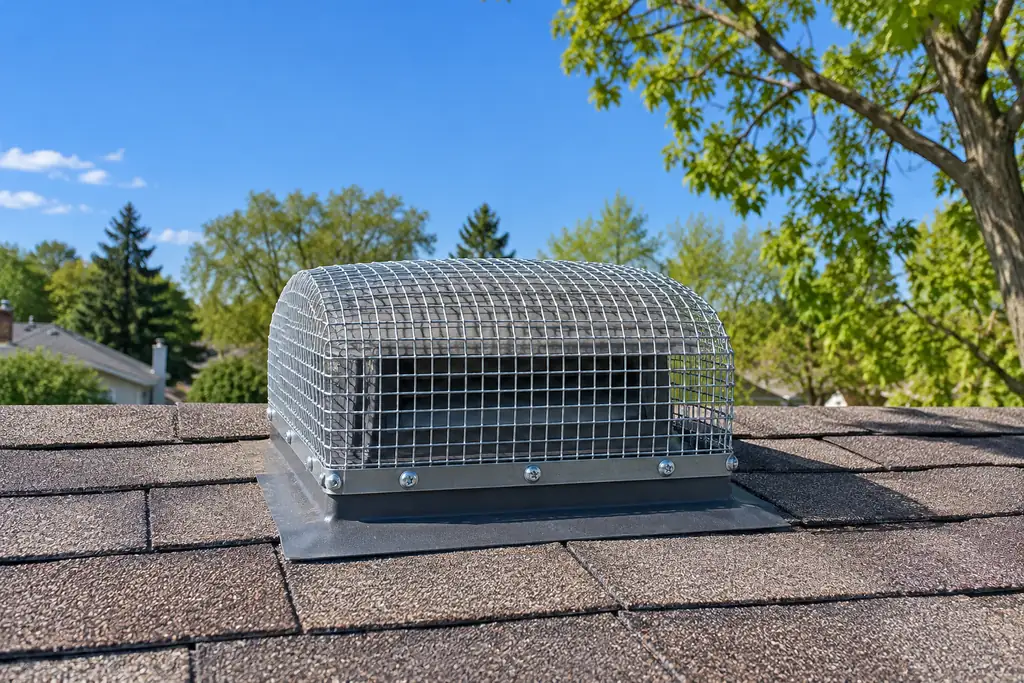
We close the entrance and the weak spots with sturdy, small-mesh metal screening that stands up to its teeth, unlike plastic or wood. The method is laid out on the sealing entry points page.
Cutting off its route to the roof
- Trim trees so branches stay more than three metres from the roof: from a branch, a squirrel jumps onto the roof with ease.
- Hang bird feeders at least a metre and a half off the ground and three metres from anything it could jump from: tree, fence, roof or deck.
- In Montreal, feeding wild animals is against city rules, but the city does allow bird feeders on private property, asking owners to keep them out of squirrels' reach and to pick up fallen seed.
- Replace damaged plastic vent covers with metal ones.
- Keep your dog away from a squirrel that's losing its fur: the mange it may have spreads to dogs through direct contact.
 Service 24/7, free quote
Where we find squirrels

Residential
- Attics and roof spaces
- Soffit corners and roof joints
- Roof and gable vents
- Upstairs walls and ceilings
- Detached garages and storage sheds
Commercial and industrial
- Buildings lined with tall trees
- Schools with large wooded grounds
- Apartment buildings with a shared attic
- Warehouses with ventilation openings
- Businesses next to parks and woods
Frequently asked questions
Can't find what you're looking for? A technician answers 24/7.
Call 514-231-1615Squirrel or mice in the wall: how can I tell?
Two clues help: the time of day and how heavy the steps sound. Squirrels make their noise in daylight hours, mostly early on, and they move more heavily, sometimes with the sound of a nut rolling. Their way in is high up near the roof, while mice often get in low on the building. If the sounds are light and mostly in the evening, think mice in the walls instead.
I still hear them in January. Don't squirrels hibernate?
No. Grey squirrels stay active all winter: they store food and go back for it, even under the snow. A squirrel that moves into your attic in the fall spends the winter there, warm. Waiting for spring doesn't help, since that's when the birthing season starts.
A squirrel chewed wires in the attic. Is that serious?
It needs to be checked. Squirrels damage electrical and phone wires, and a gnawed jacket shouldn't be left as is: have the wiring inspected by an electrician. On our side, we trap the squirrel and close off the hole it was using.
Once the squirrel is out, should I block the hole myself?
Only if you're sure none are left inside, young included. Quebec's advice is clear: get every squirrel out before closing up, or a squirrel trapped inside will do a lot of damage working its way out. And a piece of wood or plastic won't stop it for long; you need strong metal mesh with small openings.
What does it cost to get a squirrel out of the attic?
Pricing depends on the number of openings, the roof's height and access, any young in the nest, and the amount of sealing involved. The quote is free and follows the inspection.
