- Home
- Our services
- Wildlife
- Raccoon
Raccoon removal
Attics, chimneys, sheds and porches
Heavy footsteps overhead after dark, a soffit torn open, bins knocked over by morning: raccoons don't keep a low profile. We trap the animal in a cage built for it, make sure no young are left behind and seal the opening it made.
In spring, a female raccoon looks for a dry, quiet place to give birth, and an attic, an uncapped chimney or a shed that doesn't close properly will do. The young are born in April or May and usually stay with their mother until the following spring, though some head off in their first fall. So if you hear a raccoon in the roof any time from spring to fall, the first question is whether it's alone.
A raccoon doesn't settle for a narrow gap. It pulls at a shingle, pushes in a corner of soffit or tears a vent cover until the hole suits it. Inside, it flattens and soils the insulation and picks one corner for its droppings. Our wildlife removal service handles both the animal and the opening; for the roof itself, we tell you exactly what to ask your roofer. And however calm or sickly it looks, don't touch it: public health says never to touch a wild animal, even a dead one, and raccoon rabies returned to Quebec at the end of 2024.
Where it moves in and what it damages
The attic
It gets in through a soffit or roof vent, then makes a bed in the insulation. Flattened and soiled, the insulation no longer does its job as well, and sometimes has to be replaced.
The chimney
An uncapped chimney is a ready-made den. You hear scratching in the flue, and soot or debris sometimes falls into the fireplace. Keep the damper shut and don't light a fire until the flue has been checked.
The shed and garage
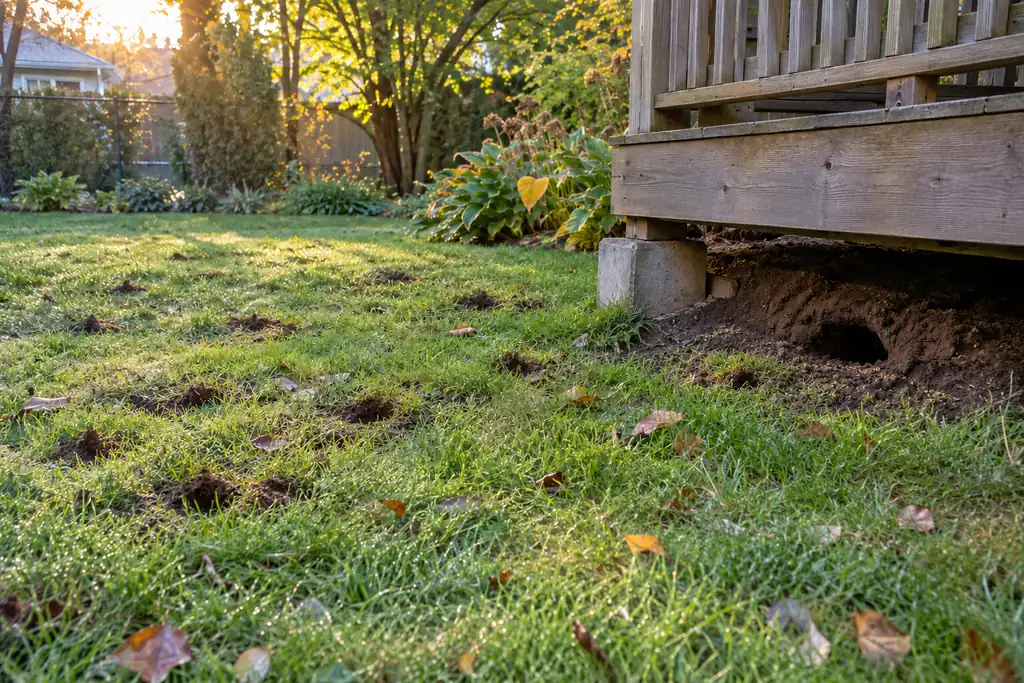
A shed on blocks or a detached garage with a door that doesn't shut gives it shelter at ground level, often a few steps from the bins. Paw prints on the shelves and torn bags give it away.
The porch and yard
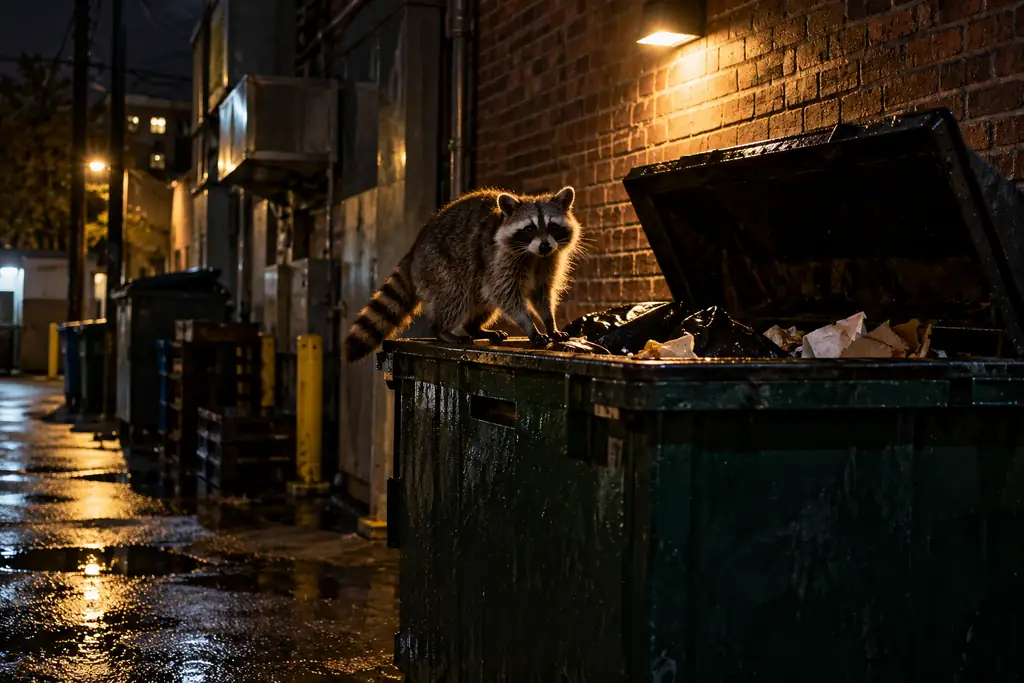
Under a porch it sleeps through the day. In the yard it tips the bins, raids the compost and, in early summer, rolls back freshly laid sod: that's when the young learn to dig for insects.
How to tell it's a raccoon
These clues set it apart from a squirrel or mice.
- Heavy steps and dragging sounds in the ceiling after dark and through the night, not light scurrying in the morning
- In spring or summer, high-pitched cries or chittering from the roof or chimney: often a litter
- A soffit pushed in or hanging loose, often near a tree, a downspout or a lower roof it uses as a staircase
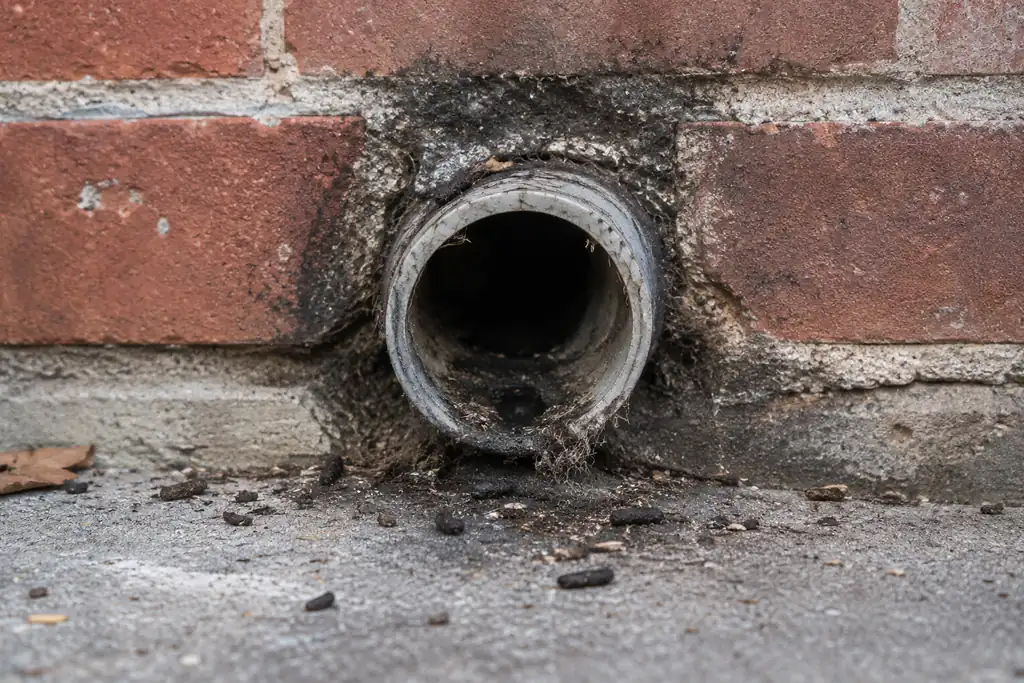
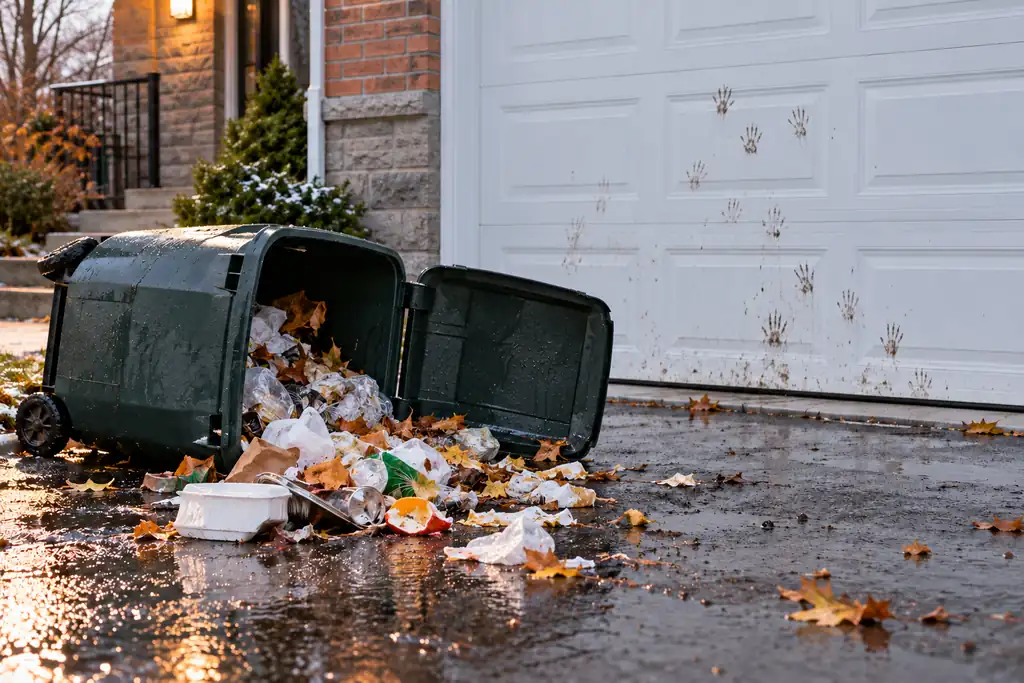
- Muddy paw prints or claw marks on the downspout, siding or chimney
- Droppings piled in one spot on a flat roof, a deck or in the attic
- Bins tipped over and bags ripped open at dawn, or sod rolled back in early summer
Where we handle raccoon problems

Residential
- Attics in houses and plexes
- Uncapped chimneys
- Sheds and detached garages
- Under porches and decks
- Flat roofs and rooftop terraces
Commercial and industrial
- Restaurants and their dumpsters
- Flat roofs and mechanical rooms
- Apartment buildings and garbage rooms
- Warehouses and loading docks
- Vacant buildings and renovation sites
From inspection to a sealed entry point
Each step takes the season and a possible litter into account.
Roof and den inspection
We find the opening it uses, the route it takes to climb up, and the damage in the attic, chimney or shed. In spring and summer, we also look for signs of a litter.
Cage trapping
Cages sized for raccoons, and safe for the people who live there, go along its route. If there's a litter, we don't trap the mother without a plan for the young: none can be left behind.
Removal under Quebec rules
What can be done with a live raccoon is regulated by the Quebec government, partly because of raccoon rabies. The animal's removal follows the rules that apply at your address.
Sealing and advice
Once the den is empty, we seal the opening (how it's done is explained under sealing entry points), then tell you what the roofer needs to repair and what draws raccoons to your property.
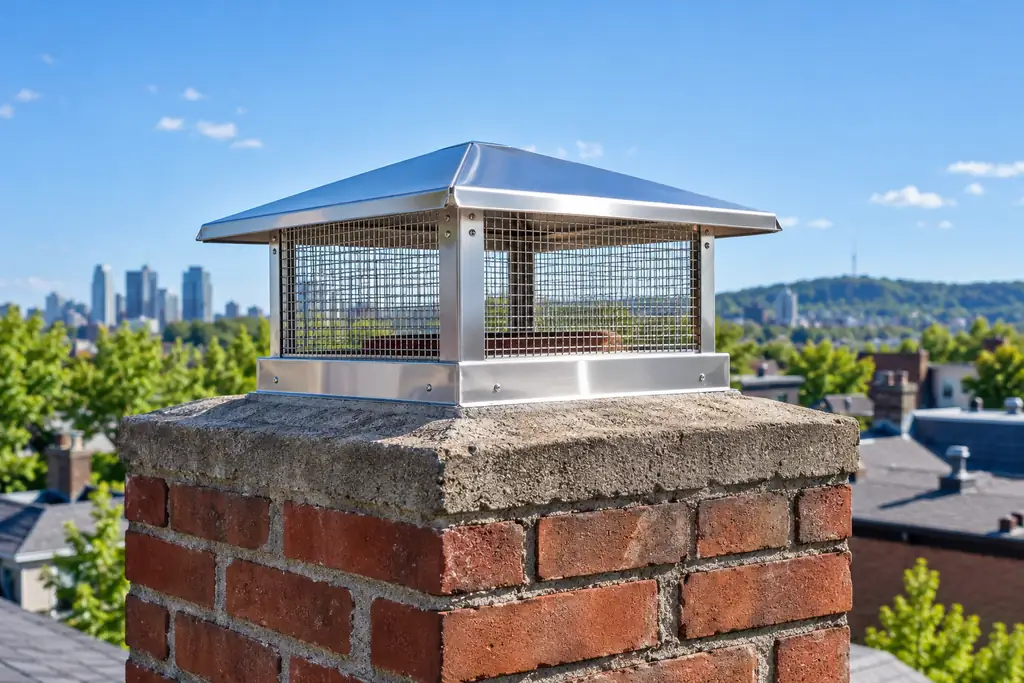
So another raccoon doesn't move in
- Fit the chimney with a screened cap: it's an opening people forget because they can't see it from the ground.
- Put the bins out the morning of collection, not the night before: raccoons make their rounds at night.
- Keep the bins in a storage box with a hinged lid, or strap the lids down with a bungee cord.
- Don't leave a bowl of cat food, fallen birdseed or an open compost bin near the porch.
- If you're laying sod, do it in mid or late summer, or stake the rolls down until they take root.
Frequently asked questions
Can't find what you're looking for? A technician answers 24/7.
Call 514-231-1615Is it a raccoon or a squirrel in my attic?
Go by the clock. Raccoons are mostly active at night, so you hear them in the evening and overnight, and their steps are heavy. Squirrels move around in daytime, especially early in the morning, and sound quick and light. If the noise starts around sunrise, see our page on squirrel removal.
Can I seal the hole while the raccoon is out?
Not until you're sure nothing is left inside. In spring and summer, a mother may have left her young in the attic: seal the hole and you trap them, and she may tear into another part of the roof to get back to them. The Quebec government also reminds homeowners to check that no animal is still inside before closing an opening.
What should I do if a raccoon bit or scratched me?
Wash the wound right away for ten to fifteen minutes with soap and water, even if it looks minor, then call Info-Santé 811: raccoons can carry rabies, and the nurse will tell you if you need medical follow-up. If your dog or cat was bitten, or got into a fight with a raccoon, call your vet. A raccoon that looks sick, or one you find dead, can be reported to the Quebec government at 1 877 346-6763.
Can a trapped raccoon be released farther away?
In practice, no. The Quebec government strongly discourages taking a raccoon away from where it was caught, prohibits taking it from the south side of the St. Lawrence to the north side and, in the municipalities designated around raccoon rabies cases, prohibits moving it at all. That list changes as new cases turn up: in fall 2026, it includes Longueuil, Brossard and Boucherville, among others. Our removal complies with these rules, and sealing the entry points is what stops another raccoon from taking its place.
How much does raccoon removal cost?
The price depends on where it has settled (attic, chimney, shed), how high and accessible the roof is, whether there's a litter and the number of openings to seal. We assess the situation on site, and the quote is free.