Every summer in Greater Montreal, wasps build their nests in yards, under roof overhangs, in sheds and in trees. They help keep the ecosystem in balance, but a nest near your house, your deck or the entrance to a business is a real danger, especially for children, pets and people with allergies.
How to spot an active nest
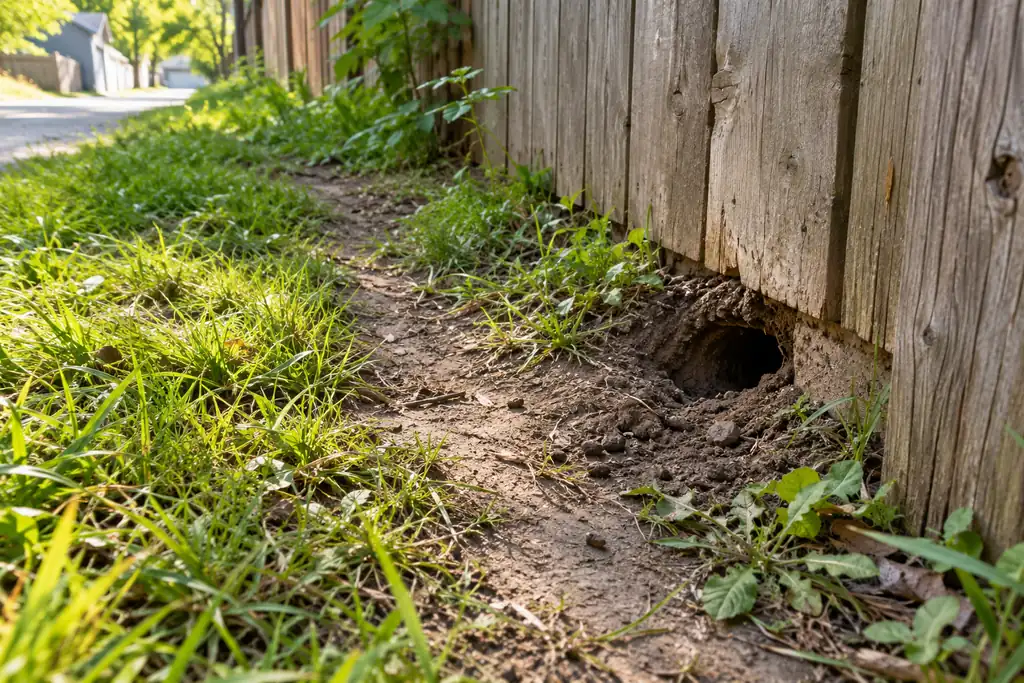
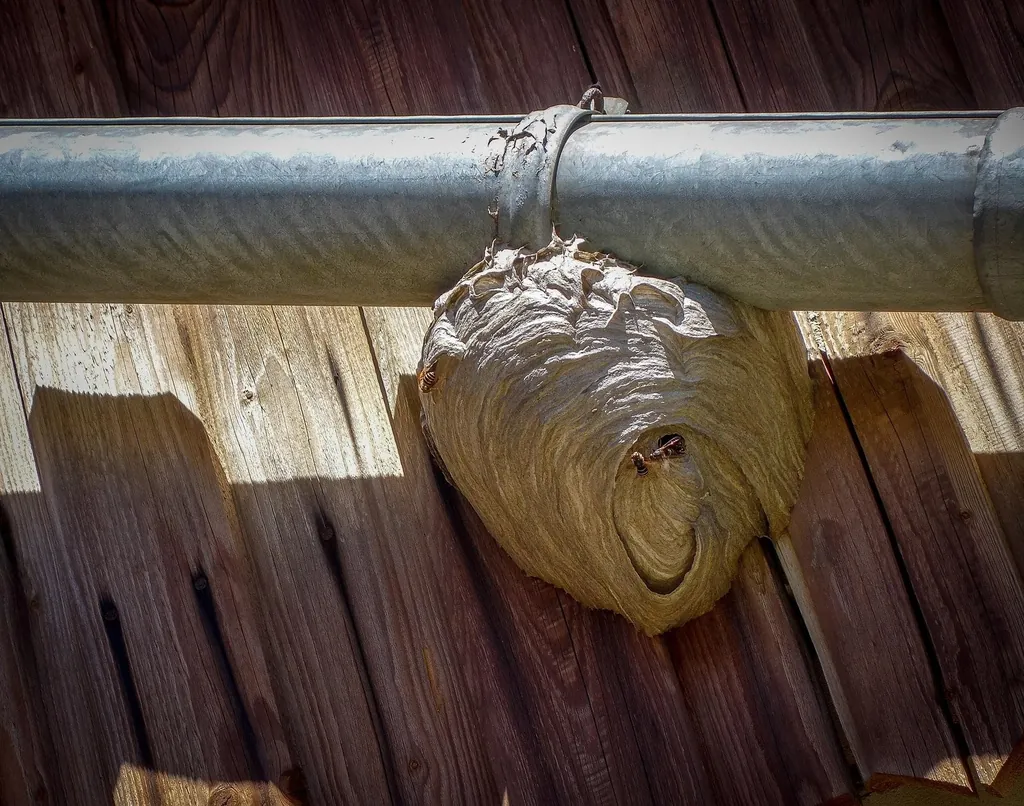
The clearest sign is a steady stream of wasps coming and going from the same spot: a corner of a soffit, a gap in the siding, a hole in the ground, a branch. The nest itself may be in plain sight, grey and papery, or completely hidden in a wall, an attic or underground. Buzzing inside a wall is another strong clue.
What not to do
- Don't plug the entrance to a nest inside a wall. The wasps will look for another way out and can end up inside your house.
- Don't go after the nest in the middle of the day. Most of the workers are out, and they come back aggressive.
- Don't use water, fire or gasoline. The risk of injury and fire is real, and the nest often stays active.
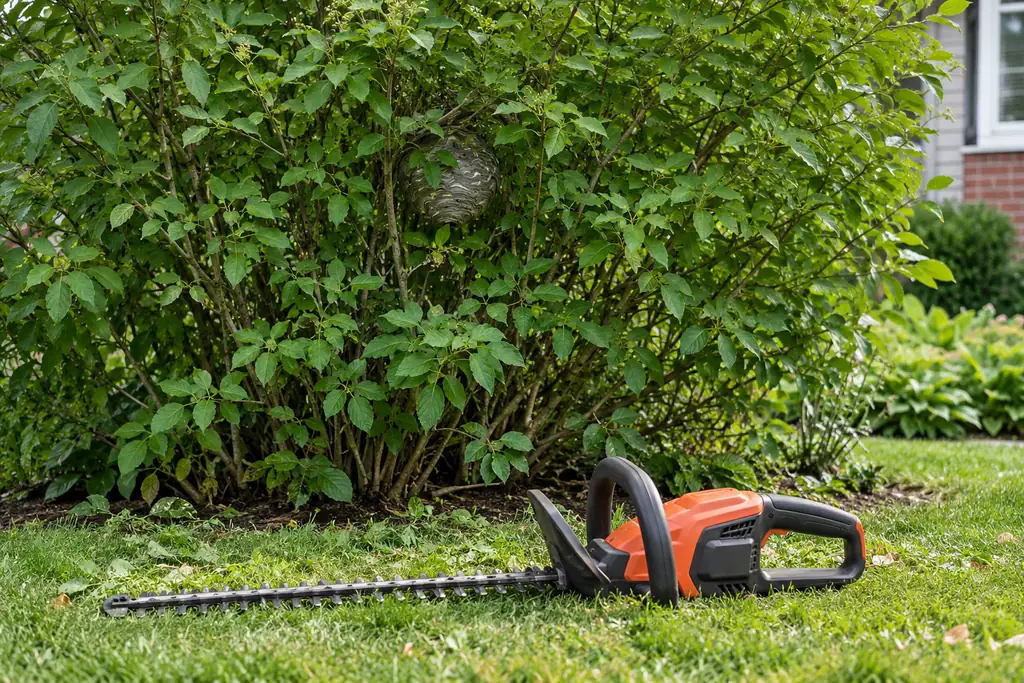
- Don't get close without protection. Wasps attack in groups, and each one can sting several times.
How a professional handles it
The technician finds the nest, looks at where it is and how much risk it poses to occupants, then treats it at the right time of day, with the proper protective gear and registered products. When possible, the nest is removed and the area is checked to make sure the activity doesn't start up again. Our service is available 24/7, because a nest you find on a Saturday night can't always wait.
Preventing nests next summer
- Check soffits, eaves and sheds early in the summer, while nests are still small.
- Plug holes in the siding and openings in the soffits.
- Keep garbage cans closed, and don't leave sugary drinks or food outside.
Is this happening at your place?
Our technicians respond 24/7 in Montreal, Laval and on the South Shore. Quotes are free.
See also: Wasp nest in a wall, Ground wasp nest, Hornet nest